The road to Huu Dinh runs quietly, lined with palms and the kind of houses that look like they’ve been standing since the first brick was fired.
You turn off the main road and into a courtyard that smells faintly of clay and smoke.
There’s no signboard, no visitor centre — just a long shed, a pile of red earth, and a rhythm that’s been repeating for generations.
Inside, the air is thick with heat and patience.
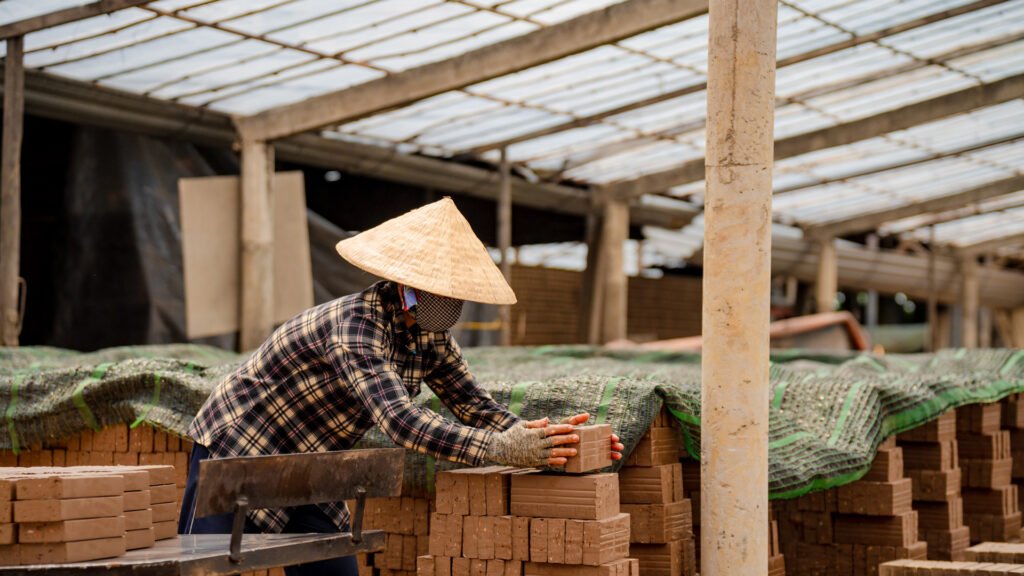
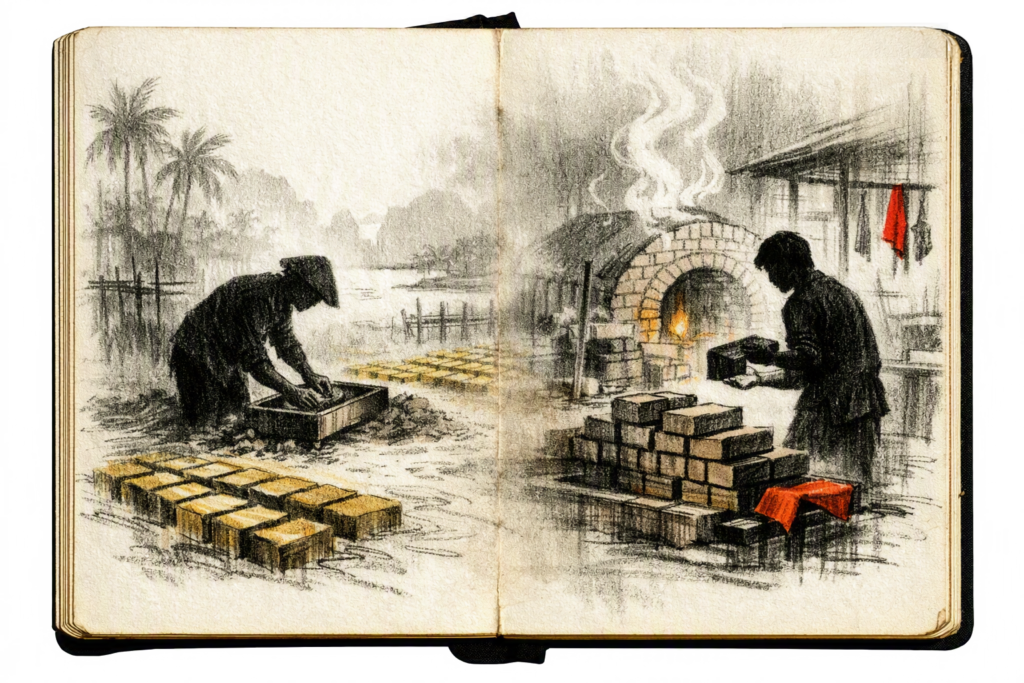
A man stands over a wooden mould, pressing wet clay into shape with the same motion his father used, and his father before him.
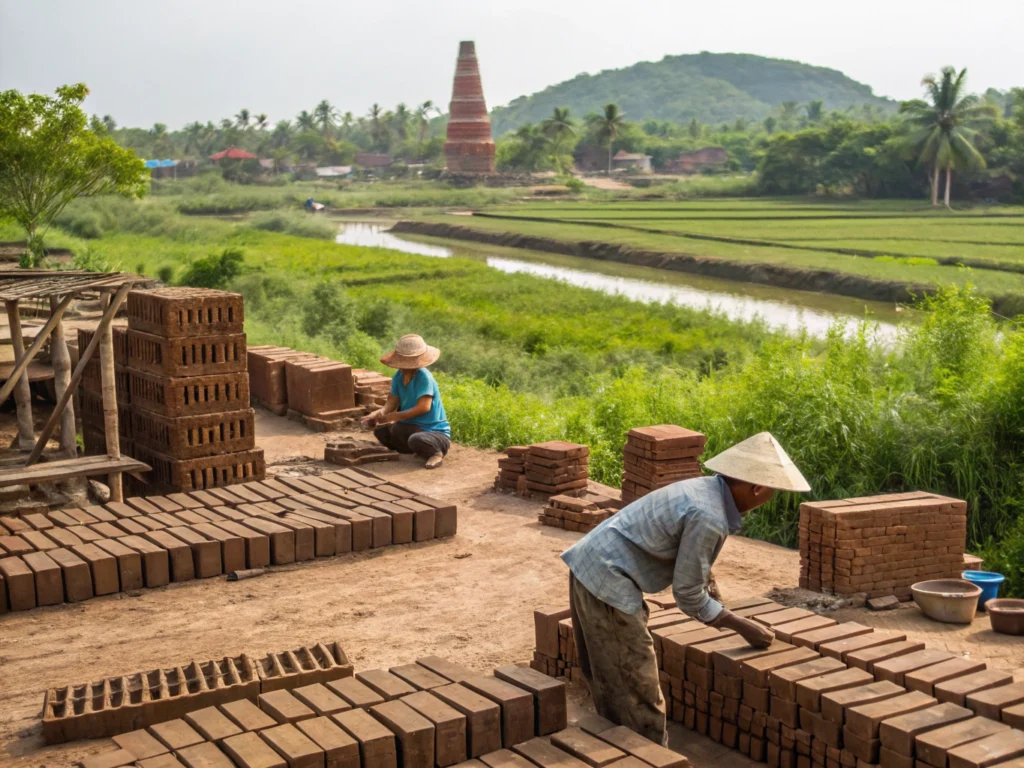
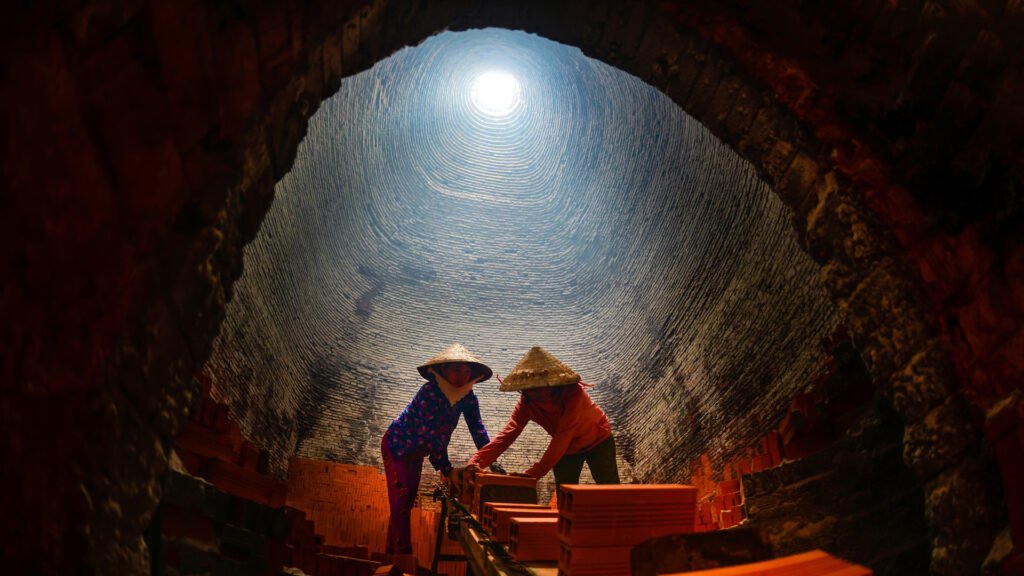
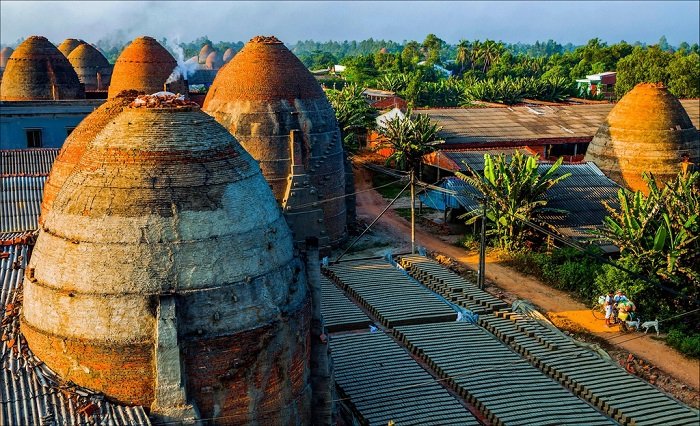
The bricks slide out smooth and heavy, lined up in rows that stretch like a timeline across the floor. Each one will dry under the sun, then vanish into the kiln’s mouth, to reappear days later as something permanent — a piece of the village itself.
You’re invited to try.
The clay is cool at first, then warm as it takes the imprint of your fingers.
Your first brick collapses. Everyone’s does. The worker laughs softly, reshapes it, and hands you another lump of earth. There’s no rush. The rhythm is the point.
Outside, stacks of finished bricks rise like miniature monuments. They’ll build homes, schools, temples — places that will outlive the people who made them. In a world obsessed with speed, this factory feels like a refusal: a place where time is measured not in hours but in generations.
It’s not a museum piece, not a staged demonstration. It’s work — real, repetitive, necessary — and somehow beautiful for that very reason.
The kiln glows, the river hums, and the afternoon light turns everything the colour of memory.
You leave with clay still under your nails and a quiet respect for the kind of craft that doesn’t need to reinvent itself to stay relevant.
It just keeps going — brick by brick, hand by hand.